Choosing an upright comfort or cruiser bicycle for short, flat, unhurried riding
One speed, three, or seven, and whether a coaster brake is enough on flat streets
How single-speeds, three-speed internal hubs and seven-speed derailleurs actually behave on gentle grades and headwinds, and where pedaling backward to stop runs out of room.
El Paseo Cruisers
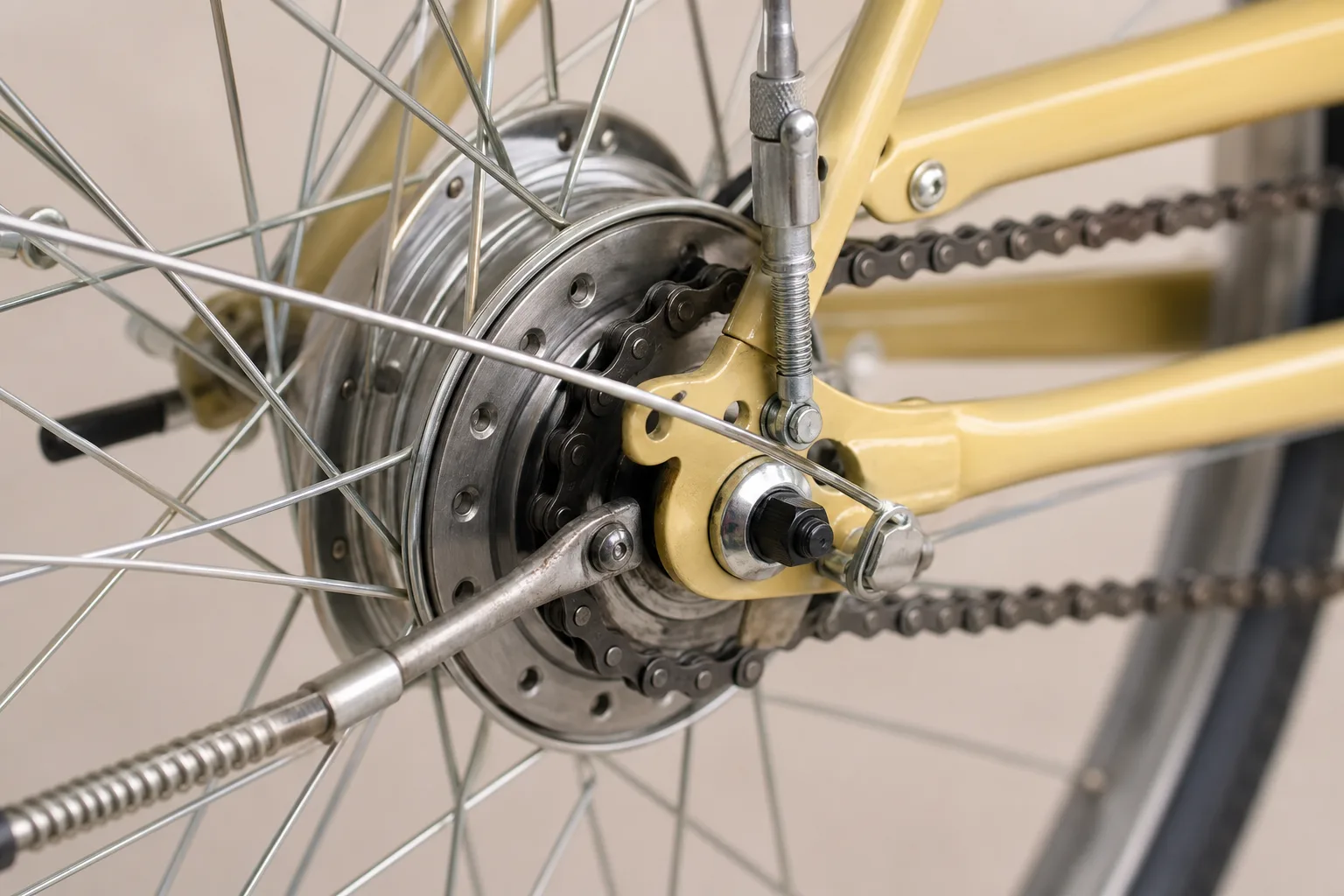
Gearing on a flat-street cruiser is not a performance question, it is a question about how often you want to be uncomfortable. On genuinely level ground with no wind, one gear does everything a rider needs, and the whole drivetrain shrinks to a chain, two sprockets and nothing to adjust. The moment the ground tilts a little, or a steady afternoon wind sets up against you, that single ratio stops flattering you. What a careful reader checks is not the gear count on the spec sheet but the specific streets, the specific wind, and the specific load the bike will carry.
What a single ratio actually feels like when the ground is not perfectly flat
A cruiser single-speed is usually geared so a relaxed cadence produces a walking-plus pace, which is exactly right for the errand it was designed around. On a two or three percent grade, the kind that never registers as a hill until you are on a bike, that same ratio asks for noticeably more force at the pedals, and most riders respond by standing up, which an upright frame and swept-back bars make awkward. A headwind does the same thing without the visual warning. If the route home from the store runs into a prevailing wind at the same hour every day, the single-speed will tell you about it, plainly, for the whole ride.
Three speeds inside the hub, and the case for sealed simplicity
An internally geared three-speed puts the whole mechanism inside the rear hub, sealed against rain, road grit and the bicycle rack that keeps clipping your derailleur. The spread is usually wide enough to cover the real cases: a lower gear for the grade and the headwind, a middle gear for everything, and a higher gear for the tailwind that arrives once a week. Because shifting happens inside the hub, you can change gears while stopped, which matters more than it sounds at a light on a slight rise. The costs are honest ones: more weight at the back wheel, a shift cable that needs occasional adjustment, and service that most home mechanics hand to a shop.
Seven speeds on a derailleur, and what the extra range buys
A seven-speed derailleur costs less than an equivalent internal hub, weighs less, and offers finer steps between ratios, so you can hold a comfortable cadence instead of choosing between two imperfect options. In exchange, the mechanism hangs in the open air, exposed to salt, sand and the ground when the bike tips over, and it will not shift while you are stopped. For a bike stored inside and ridden on paved streets, that exposure is manageable, and cables, chain and cassette are inexpensive and widely stocked. The practical question is whether your terrain rewards seven closely spaced choices, or whether three well-separated ones would go unused past the middle.
Where pedaling backward to stop runs out of margin
A coaster brake is genuinely good at the job it was built for: a light bike, a dry street, a rider going slowly and stopping gently, with no cable, no lever and no pads to inspect. Its limits are specific rather than vague. It acts on the rear wheel only, and the rear wheel is where weight leaves first under braking, so hard stops arrive as a skid rather than a shorter distance. Wet pavement lengthens that skid. A loaded front basket or a child seat shifts weight in ways the rear brake cannot answer for. On a sustained descent the hub heats, and braking force fades before you notice it going. The Consumer Product Safety Commission is the federal body responsible for bicycle braking requirements, and it is worth knowing that a coaster brake meeting the rules is not the same as a coaster brake being sufficient for your route.
How to decide from your own streets rather than the catalog
Ride the route you will actually ride, at the hour you will actually ride it, and note three things: the steepest sustained rise, the direction of the wind, and the heaviest load you plan to carry. Flat, unloaded, dry, short: a single-speed with a coaster brake is a complete answer, and a clean one. Add a grade or a regular headwind and three speeds pay for themselves. Add groceries, a passenger, or rain that arrives without asking, and a hand-operated front brake belongs on the bike alongside whatever stops the rear wheel, because two independent systems fail independently.
The gearing decision is reversible in a way the brake decision is not. A cog can be swapped in an afternoon, but adding a front brake means a fork with mounting provisions and a frame that was drilled for a cable, so it is the thing to settle before money changes hands.